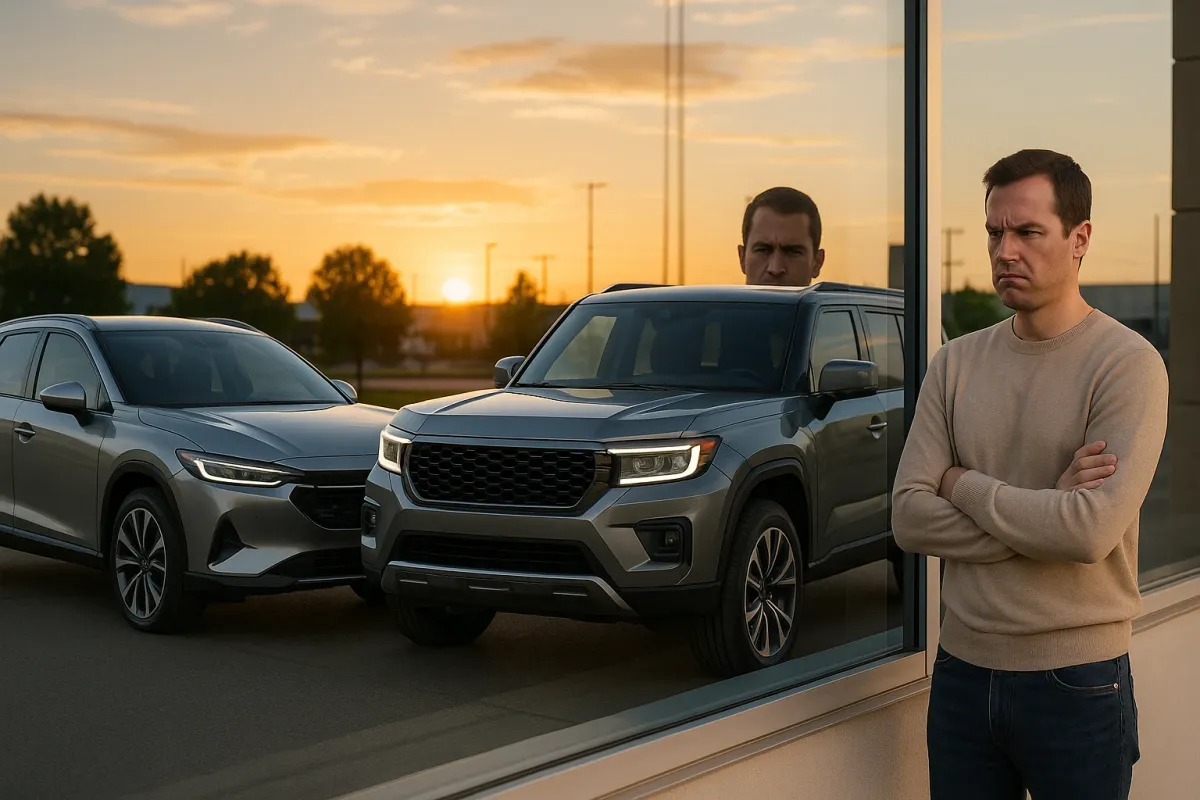
In celebrity culture, people love to say, “Wow, how old is that chap?” when a photo surfaces that doesn’t quite match what they expect. The SUV world has its own version of that moment: the first time a brand‑new model suddenly looks and feels old after just a couple of years on the road.
Right now, with 2025 model‑year SUVs arriving and fresh reviews dropping across YouTube, Instagram, and major auto outlets, that “aging curve” is more visible than ever. As early real‑world tests of updated models from Toyota, Hyundai, Kia, Ford, BMW, and Tesla roll out, a pattern is emerging: some SUVs are engineered to stay desirable well into their lifecycle, while others lean on short‑lived trends that don’t survive past the first facelift.
This review‑style deep dive focuses on what current testing and early owner feedback are revealing about long‑term appeal in today’s SUVs—and how you can spot a future “still looks new” model versus one that will have people asking “how old is that thing?” just a few years from now.
1. Design That Resists Trends: Why Some 2025 SUVs Won’t Look “Old” in 3 Years
Recent first drives of 2025 models like the Toyota Land Cruiser, Hyundai Santa Fe, and BMW X5 LCI updates highlight a clear split in design philosophy. Some manufacturers are leaning into aggressive, polarizing styling—oversized grilles, overly busy lighting signatures, extreme creasing—while others opt for a cleaner, more architectural form that ages more gracefully.
Reviewers are already noting that:
- Blocky, purpose‑driven designs (e.g., the new Land Cruiser and Hyundai’s reimagined Santa Fe) tend to look intentional rather than trendy. Vertical front ends, squared‑off wheel arches, and simple glasshouse shapes echo classic SUVs, which helps them stay visually relevant.
- Over‑complicated front fascias with multi‑tier headlights and oversized appliqués are already showing fatigue. Several 2022–2023 crossovers currently being compared against updated 2025 rivals look dated primarily because the “angry face” trend moved on quickly.
- Wheel and tire sizing plays a subtle but huge role. Many early reviews of premium SUVs point out 21–23 inch wheels that may photograph well on social media but ride harshly in the real world and look cartoonish as design language evolves. More balanced setups (19–20 inch wheels with real sidewall) tend to look less time‑stamped.
From a buyer’s perspective, the lesson from current reviews is clear: when you evaluate a 2025 SUV, don’t just ask “Does this look cool today?” Ask: “If the badge and plate were covered, would I be able to tell which specific year this is—or would it just read as a clean, well‑proportioned SUV?” The models that pass that test are the ones reviewers expect to look fresh longest.
2. Infotainment and Screens: The Feature Race That Dates SUVs Overnight
If there is one area where reviewers are immediately calling out “this already feels old,” it’s infotainment. As 2025 updates roll in—especially from Hyundai, Kia, Mercedes‑Benz, BMW, and Tesla—the gap between cutting‑edge and “last‑gen” interfaces is widening noticeably.
Recent road tests and comparison reviews point to three key differentiators:
Software longevity and update cadence
- Tesla has normalized frequent over‑the‑air (OTA) updates, and now Ford (BlueCruise), Hyundai/Kia (OTA for navigation and drive modes), and GM (Ultifi platform) are following.
- Reviewers increasingly ding SUVs that ship with non‑updateable, fixed feature sets, especially in the $40,000+ bracket.
If an SUV’s infotainment system can’t receive significant functional updates, reviewers are already warning buyers: “This may feel five years old in two.”
- Interface philosophy: single giant screen vs. mixed controls
- Several new reviews of 2025 European and Korean SUVs praise models that keep essential physical controls (climate, volume, defrost) while using large central screens for navigation, media, and apps.
- Models that bury every function in multi‑layer menus are getting criticized not only for usability but for future feel. A complicated interface that’s trendy now becomes frustrating and “old‑tech” almost immediately.
A recurring line in current reviews: “This is the kind of UI that will make the whole car feel outdated once the next software design trend hits.”
Screen quality and responsiveness
- Testers are increasingly sensitive to touch latency, font rendering, and screen brightness. A just‑launched 2025 SUV with even a slight lag or dated graphics is instantly labeled as “behind,” especially compared with updated Tesla, BMW iDrive 9, and Hyundai/Kia ccNC systems.
If you’re shopping, pay close attention to whether reviewers mention OTA capability, interface clarity, and responsiveness. In 2025, those three factors are what separate “future‑proof tech hub” from “nice, but already feels like last year’s phone.”
3. Powertrain Reality Check: Real‑World Efficiency vs. Brochure Promises
With regulators tightening emissions standards and brands like Toyota, Hyundai, Ford, and GM ramping up hybrid and EV offerings, current SUV reviews are relentlessly focused on one question: Does this powertrain deliver in the real world, or just on the spec sheet?
Recent test data and early owner impressions are highlighting several trends:
- Hybrids are becoming the new default “smart buy.”
Reviewers testing 2025 hybrid SUVs (RAV4 Hybrid, Escape Hybrid, Hyundai Santa Fe Hybrid, Kia Sorento Hybrid, and their plug‑in variants) consistently report real‑world consumption much closer to EPA figures than many turbo‑gas rivals, especially in city driving. For buyers, this means lower running costs and a less volatile ownership experience when fuel prices spike.
- Downsized turbo‑gas engines are under scrutiny.
A growing number of long‑term reviews are calling out 2.0–2.5L turbo gas engines for struggling in heavy SUVs when fully loaded, often returning worse fuel economy than their larger, naturally aspirated predecessors. That gap becomes more obvious when testers compare them back‑to‑back with new hybrids in the same segment.
- EV SUVs: range honesty and charging curve matter more than peak power.
- Tested vs. claimed highway range at 70–75 mph
- Charging curve consistency (can it hold high kW rates above 50% battery?)
- Cold‑weather behavior and battery preconditioning
Reviewers covering 2025 updates to models like the Tesla Model Y, Hyundai Ioniq 5/EV6 SUV derivatives, and GM’s Ultium‑based crossovers are focusing less on 0–60 times and more on:
EV SUVs with realistic range and stable fast charging performance are getting strong “future‑proof” marks; those that depend heavily on ideal conditions to hit their numbers are being labeled risky for long‑term satisfaction.
As you read current SUV reviews, look for repeated phrases like “effortless torque,” “consistent real‑world economy,” and “no surprises at the pump or charger.” Those comments are often better long‑term indicators than the headline horsepower or official MPG/kWh figures.
4. Ride, Noise, and Build Quality: The “Invisible” Factors Reviewers Are Elevating
Social media tends to amplify styling, screen size, and 0–60 times. But if you look at full‑length road tests and comparative reviews hitting the web right now—especially from outlets doing 500–1000 mile evaluations—three subtler qualities are taking center stage: ride comfort, cabin noise, and long‑term solidity.
Recent 2025 SUV reviews are converging on a few key themes:
- Over‑large wheels are a recurring pain point.
Testers frequently criticize higher trims with 20–23 inch wheels for transmitting sharp impacts and feeling unsettled on imperfect pavement. Mid‑trim models with smaller wheels often ride better, age better (fewer bent rims, cheaper tires), and are increasingly being recommended over top trims.
- Acoustic insulation is separating “premium” from “pricey.”
- Double‑pane front glass (and whether it’s standard or trim‑dependent)
- Firewall insulation effectiveness
- Wind noise around the mirrors and A‑pillars
Reviewers are paying close attention to:
SUVs that combine quiet cabins with modestly sized wheels and good suspension tuning are being called out as the true long‑distance standouts—far more than those that rely on ambient lighting and fake engine sound for “premium feel.”
- Creaks, rattles, and material quality in early production builds are red flags.
- Trim pieces that flex when pressed
- Gloss‑black panels that scratch instantly
- Early cabin rattles over rough roads
With several brands rushing mid‑cycle updates to market, some 2025 first drives have already reported:
Reviewers increasingly treat these as indicators of how the SUV will feel in year five, not just inconvenient launch bugs.
When scanning reviews, look beyond the headline scores and search for comments on “road noise,” “secondary ride,” “door shut feel,” and “structure.” These are exactly the areas that determine whether your SUV still feels tight and refined when the next generation lands on dealer lots.
5. Practicality and Packaging: The Details That Decide Long‑Term Happiness
The most shared SUV clips on TikTok and Instagram usually focus on “wow” features—massive panoramic screens, hands‑free driving demos, or trick light shows. Yet in detailed written and video reviews of 2024–2025 SUVs, the most decisive comments are increasingly about basic usability and packaging.
Here’s what current testers are zeroing in on:
- Second‑ and third‑row realities
- Reviewers are now far less tolerant of “token” third rows. Several 2025 three‑row models are being penalized for adult‑unfriendly 3rd rows and cargo areas that disappear when all seats are up.
- SUVs that prioritize true adult‑usable 2nd rows with reclining backrests and flat floors are scoring higher in family‑focused reviews, even if their third rows are optional or absent.
- Cargo flexibility over sheer volume
- Load floor height and flatness
- Split‑folding ratios (40/20/40 is getting praise)
- Under‑floor storage and spare wheel solutions
- How easy it is to fold seats from the tailgate
- Charging, storage, and daily‑use ergonomics
- Wireless CarPlay/Android Auto stability
- Number and placement of USB‑C ports (including for 3rd‑row passengers)
- Phone storage that actually fits modern large phones with cases
- Physical hooks, tie‑downs, and bag retainers in the cargo area
- Driver‑assist that helps, not hassles
- Steering assist smoothness and “ping‑pong” behavior
- False alerts or oversensitivity
- How easily systems can be toggled or customized
Testers care less about the maximum cubic‑feet headline and more about:
Across recent reviews, you’ll see repeated praise—or criticism—for:
With more 2025 SUVs shipping with lane‑keeping, adaptive cruise, and sometimes hands‑free options, reviewers are spending more time evaluating:
Suites that operate quietly, predictably, and without constant beeping are winning high marks as “liveable long‑term,” while intrusive systems are being cited as possible reasons owners may eventually turn features off—and feel shortchanged.
From the latest round of reviews, the SUVs that stand out are the ones that get these boring‑on‑paper details right. These are also the vehicles most likely to feel “just works” satisfying when they’re no longer the newest thing on the lot.
Conclusion
As fresh 2025 SUV reviews continue to roll out, a pattern is emerging that should matter to anyone thinking about buying—or leasing—right now. The models that reviewers predict will age best aren’t necessarily the ones with the wildest styling, the biggest screens, or the boldest performance figures.
Instead, the long‑term standouts share five traits that current testing keeps reinforcing:
- Design that’s coherent rather than just loud
- Infotainment built for updates, not obsolescence
- Powertrains tuned for real‑world consistency
- Ride and build quality that feel solid past the honeymoon phase
- Packaging and ergonomics that make daily life easier, not flashier
When you read or watch the latest SUV reviews this week, filter them through that lens. The question isn’t just “Is this impressive today?” It’s “Will this still feel right when the next big redesign drops?”
That’s how you avoid owning the SUV that has people asking, “Wow… how old is that thing?” long before you’re ready to move on.
Key Takeaway
The most important thing to remember from this article is that this information can change how you think about Reviews.