SUV buyers have spent the last decade chasing horsepower, screens, and range figures. In 2025, another spec line is quietly becoming the real differentiator: safety technology. Regulatory pressure, rapid advances in sensors and computing, and the push toward automated driving are reshaping what “safe” means in an SUV. For enthusiasts and family buyers alike, understanding this shift is no longer optional—it directly affects what you should buy, how much you’ll pay, and how your vehicle will age.
This industry news round‑up unpacks the safety tech turning points now redefining the SUV landscape, with five key developments that matter directly to serious shoppers.
Regulatory Pressure Is Forcing a New Baseline for SUV Safety
Over the next few model years, safety content in SUVs will be driven as much by regulation as by marketing.
In the U.S., the National Highway Traffic Safety Administration (NHTSA) is rolling out tougher crash standards and rulemakings that directly impact SUVs. Updated roof crush and side-impact requirements, along with a long-discussed “advanced drunk and impaired driving prevention technology” mandate under the Bipartisan Infrastructure Law, are pushing automakers to redesign structures and integrate more sensors and driver monitoring systems. That means even mainstream compact SUVs will increasingly ship with hardware that, a few years ago, would have been luxury-only.
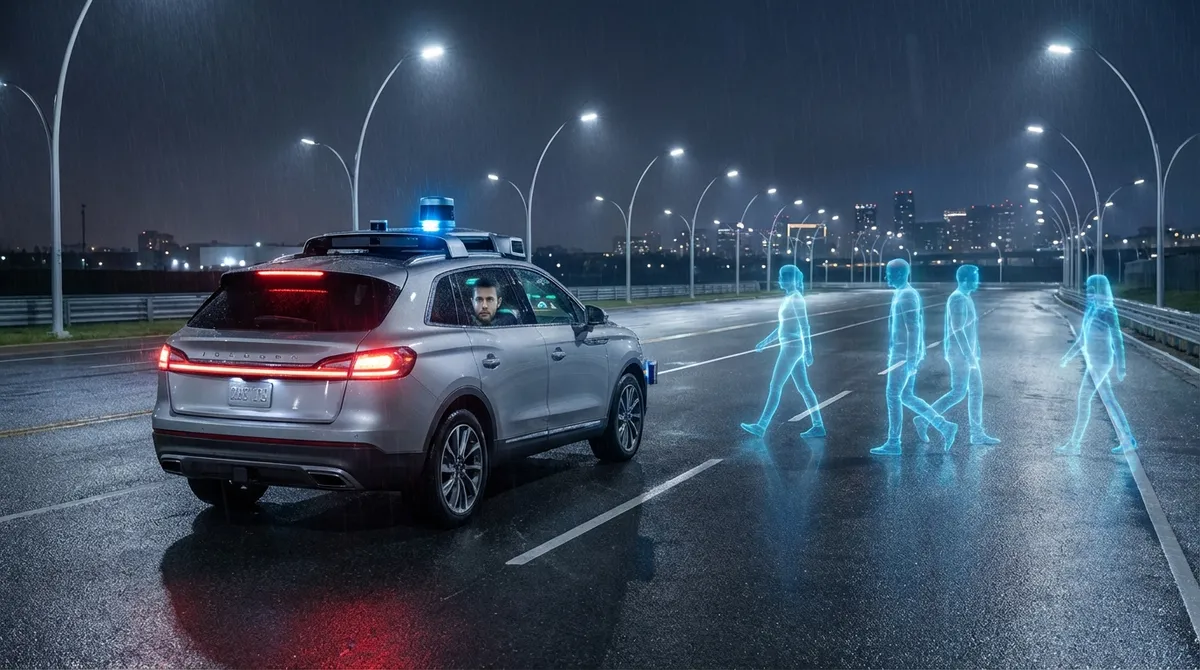
Pedestrian safety rules are a big driver globally. The EU’s General Safety Regulation (GSR) now requires features like Intelligent Speed Assistance (ISA), advanced emergency braking with vulnerable road user detection, and enhanced collision warning systems. Because most brands build global architectures, the technologies that satisfy Euro NCAP and EU regulations end up baked into SUVs sold worldwide, including in North America and Asia, even where specific features aren’t yet mandatory.
This regulatory squeeze is intersecting with consumer rating programs. Euro NCAP and the U.S. Insurance Institute for Highway Safety (IIHS) have steadily raised the bar, adding tests for night-time pedestrian detection, large vehicle compatibility (SUV-to-car crashes), and active safety performance. New SUVs that don’t hit “Top Safety Pick+” or equivalent top scores are immediately handicapped in the market. Automakers are responding by overbuilding safety suites—more cameras, more radar, and higher-performance ECUs—to stay ahead of the scoring curve and future-proof against pending rule changes.
For buyers, the practical impact is twofold: base-level safety in 2025 SUVs is stronger than ever, but trim-level and option-package differences in advanced safety content are also more complex. Reading the fine print of safety equipment lists is now as important as scanning horsepower or towing specs.
Sensor Stacks Are Converging: Cameras, Radar, and the Return of Lidar
The industry once flirted with “camera-only” approaches to driver assistance. In 2025, the pendulum is swinging back toward multi-sensor redundancy, especially in larger and more expensive SUVs.
Radar is seeing a quiet renaissance. New 4D imaging radar units can produce a quasi-3D map of the environment, tracking speed, angle, and height with far greater fidelity than traditional 77 GHz radar. This matters in scenarios where cameras struggle, such as heavy rain, fog, snow, or low sun. Premium SUVs are integrating multiple radar units—front, rear, and often in the corners—to support cross-traffic braking, accurate blind-spot intervention, and highway lane changes under adaptive cruise.
Lidar, once dismissed as too costly, is reappearing on higher-end SUVs, particularly in Chinese and European markets, and slowly bleeding into U.S.-bound models. Solid‑state lidar units packaged in grilles or rooflines can detect small objects and road edges outside camera visibility, improving automated lane centering and emergency braking performance at night. For enthusiasts and tech-oriented buyers, lidar-equipped SUVs represent a clear hardware step up in the path toward more automated capabilities via future software updates.
Camera systems themselves are becoming more sophisticated. High dynamic range (HDR) sensors, infrared or near-IR capability for driver monitoring and night vision, and higher resolutions all improve object classification and lane detection reliability. Around-view camera suites are now frequently integrated with auto parking and low-speed obstacle detection that can actively brake before a wheel drops off a curb or into a hidden obstacle.
From an enthusiast’s perspective, the key story is that sensor hardware now meaningfully differentiates SUV trims and price points, even within the same model line. A “driver assistance package” isn’t just software; it often includes upgraded radar modules, extra cameras, or even lidar. This affects both real-world safety and the potential for future feature unlocks, so checking the exact sensor spec—not just the marketing name—is becoming critical.
From Simple AEB to Semi-Autonomous: The ADAS Arms Race
Advanced Driver Assistance Systems (ADAS) have progressed from basic forward collision warning and lane-keeping assist to increasingly robust partial automation—especially in the SUV segment, where margins can support expensive compute and sensor suites.
Modern adaptive cruise control can now handle stop‑and‑go traffic seamlessly, while lane centering systems use high-definition maps and predictive algorithms to maintain trajectory even when lane markings are faded or inconsistent. Some highway assist systems allow automated lane changes with driver confirmation via turn signal, while a smaller set are testing or deploying hands-free operation in defined “blue zones” or mapped highways, using driver-facing cameras to ensure attention.
SUVs are also integrating more active evasive features. Active Emergency Steering Assist can nudge the vehicle around a pedestrian or stopped vehicle if braking alone won’t prevent an impact. Intersection Collision Avoidance monitors cross-traffic when turning left or right, automatically braking if the driver begins an unsafe maneuver. Rear AEB is becoming more common, detecting approaching vehicles, cyclists, or pedestrians when backing out of driveways or parking spaces.
However, industry news is increasingly focused on the regulatory and liability side of these features. NHTSA and other regulators are scrutinizing how systems are marketed (e.g., “Autopilot” vs. “Driver Assist”), whether they reliably detect driver inattention, and how often they are implicated in crashes. Over-the-air (OTA) updates are now routinely used to modify ADAS behavior after the fact—tightening lane-keeping, changing following distances, or adjusting steering torque thresholds.
For buyers, this means two things. First, a new SUV’s driving behavior may change over time as software updates refine ADAS calibration. Second, comparing systems across brands is no longer just about whether a feature exists, but how it’s tuned: how natural is the lane-centering on a winding highway, how quickly does adaptive cruise react to cut-ins, and how aggressively does the system nag inattentive drivers? The enthusiast test drive now includes evaluating software behavior, not just engine character.
Structural Engineering and Crash Compatibility Are Quietly Transforming SUVs
While software and sensors grab headlines, the less visible but equally important revolution is happening in SUV structures.
The proliferation of ultra-high-strength steels, hot-stamped components, and tailored blanks allows engineers to tune crumple zones and load paths with much finer granularity. This enables SUVs to protect occupants in severe crashes while also reducing “aggressivity” toward smaller vehicles. New front-end designs incorporate lower load paths to better engage the crash structures of sedans and compact crossovers, aiming to reduce the historically higher fatality risk for occupants of smaller cars struck by large SUVs.
Battery-electric SUVs add new complexity. Floor-mounted battery packs increase stiffness and lower the center of gravity, which can reduce rollover risk but also shift crash energy management. Manufacturers are designing sophisticated side sills and underbody structures to protect the pack from intrusion without transmitting excessive forces into the cabin. Multi-load-path strategies, with both upper and lower crash rails, help meet demanding small-overlap and side-impact tests like those from IIHS and Euro NCAP.
Weight remains a double-edged sword. Heavier SUVs can protect their own occupants better but increase risks to others and can demand longer stopping distances, stressing brakes and tires. The industry is responding with bigger brake packages, higher-performance friction materials, and regenerative braking strategies in EVs that offload some braking to motors. Advanced chassis control systems—electronic stability control, torque vectoring, and active anti-roll bars—are being calibrated not only for performance but also for emergency handling stability when fully loaded or towing.
Crash test organizations are now explicitly evaluating and publishing results related to “vehicle-to-vehicle compatibility” and rear-occupant protection, leading manufacturers to reinforce second-row and third-row structures. For buyers using three-row SUVs as family haulers, this is a critical point: newer platforms with strong rear-occupant scores may offer materially better protection for children and third-row passengers than older designs, even within the same brand.
Connected Safety: V2X, OTA Updates, and Data-Driven Development
The next wave of SUV safety gains will not come only from hardware bolted to the vehicle, but from how vehicles talk—to each other, to infrastructure, and to the cloud.
Vehicle-to-Everything (V2X) communication is gradually moving from pilot projects into real deployment. Using technologies like Cellular Vehicle-to-Everything (C-V2X), future SUVs will be able to receive warnings about hazards beyond line of sight: a car hard-braking around a blind corner, a vehicle stalled just over a hill, or a red-light runner approaching an intersection. While large-scale deployment is still in early stages, major automakers and infrastructure providers are running regional rollouts, especially in markets like China, parts of Europe, and selected U.S. corridors.
Simultaneously, safety is becoming dynamically updatable. OTA updates allow automakers to adjust airbag deployment thresholds, refine ABS/ESC algorithms, update ADAS strategies, and even add new safety features after sale. When regulators or manufacturers identify patterns in crash or near‑miss data, they can respond with software patches rather than waiting for a new model year. This makes 2025+ SUVs more “alive” from a safety standpoint than any vehicles that came before.
However, this connectivity raises questions about cybersecurity and data privacy. The same data streams that power advanced crash analysis and predictive safety can also reveal detailed information about driver behavior and locations. Regulators and consumer advocates are pushing for clearer rules on what safety-related data can be collected, stored, and shared. At the same time, automotive cybersecurity standards (such as ISO/SAE 21434 and UNECE R155 in many markets) now require automakers to implement robust protections against hacking that could compromise safety-critical systems.
For buyers, the practical takeaway is that a 2025 SUV’s safety performance is partially defined by its software and connectivity roadmap. Looking beyond initial equipment lists to understand how frequently a manufacturer updates its fleet, how transparent it is about OTA changes, and how it handles security issues is becoming a key part of a well-informed purchase decision.
Conclusion
SUV safety in 2025 is no longer just about bigger crumple zones and more airbags. It’s a rapidly evolving ecosystem built on advanced sensors, powerful onboard compute, aggressive regulatory pressure, connected-car data, and sophisticated structural engineering. For car enthusiasts and serious buyers, keeping up with these industry developments pays off in two ways: you can make smarter choices about which SUVs genuinely deliver next‑generation protection, and you can better understand how software, hardware, and regulation will shape the driving experience over the life of the vehicle.
When comparing models, it’s now essential to look beyond generic “driver assistance” bullet points. Dig into sensor configurations, crash test results, OTA policies, structural ratings for rear and small-overlap impacts, and the brand’s track record on safety updates. In a segment where nearly every SUV claims to be “advanced” and “smart,” the real differentiation lies in the details—and those details are changing faster than ever.
Sources
- NHTSA – U.S. Vehicle Safety Regulations and Rulemaking - Official U.S. government information on safety standards, crash regulations, and upcoming rulemakings that affect SUVs
- IIHS – Vehicle Ratings and Crash Test Results - Independent crash test data and safety evaluations, including SUV compatibility, rear-occupant protection, and active safety performance
- Euro NCAP – Safety Ratings and Protocols - European crash testing and active safety assessments that drive global SUV design and ADAS development
- European Commission – General Safety Regulation (GSR) - Overview of mandatory advanced safety features in the EU, influencing global SUV safety content
- SAE International – Connected and Automated Vehicle Resources - Technical background on ADAS, V2X communication, and standards shaping the future of SUV safety systems
Key Takeaway
The most important thing to remember from this article is that this information can change how you think about Industry News.