Advanced safety tech is no longer a luxury‑SUV party trick—it’s the core battlefield where mainstream, luxury, and electric SUVs are now competing hardest. From AI‑driven driver monitoring to over‑the‑air (OTA) safety upgrades, the segment is changing so quickly that many buyers don’t fully understand what they’re getting—or missing—when they sign on the dotted line. This shift is reshaping crash standards, insurance ratings, and even how automakers design platforms.
This deep dive breaks down five critical developments in SUV safety technology that enthusiasts and serious shoppers should be watching right now—and what they actually mean on the road, not just in the brochure.
1. New Crash Tests Are Targeting Real‑World SUV Weaknesses
For years, most buyers focused on star ratings and “Top Safety Pick+” badges without looking under the surface. Regulators and safety institutes are now tightening their standards specifically in ways that hit SUVs hardest, especially larger, heavier models.
The Insurance Institute for Highway Safety (IIHS) has updated its side‑impact test with a heavier barrier moving at higher speeds to better simulate an SUV or pickup hitting another vehicle. Many previously top‑rated SUVs initially failed to earn the highest rating under the new protocol, forcing structural reinforcements in doors, B‑pillars, and underbody rails. At the same time, small‑overlap crashes—where just a corner of the vehicle hits an object—remain a challenge for tall, body‑on‑frame SUVs with high ride heights and stiffer frames.
Another emerging focus is rear‑seat occupant protection. New test criteria now evaluate how well second‑row passengers are restrained and how likely they are to “submarine” under belts in a crash. This matters for three‑row SUVs marketed as family haulers, where automakers historically prioritized front occupants. As a result, you’ll increasingly see redesigned rear belts with load limiters, pretensioners, and more sophisticated airbag coverage, including rear‑seat side‑curtain and even center airbags.
For buyers, this means older five‑star ratings are no longer apples‑to‑apples with the newest test cycles. A 2020 “Top Safety Pick+” midsize SUV may not meet today’s top thresholds under updated side‑impact and rear‑seat criteria, even if its brochure still proudly displays old awards.
2. Advanced Driver Assistance Is Becoming Mandatory — But Not Equal
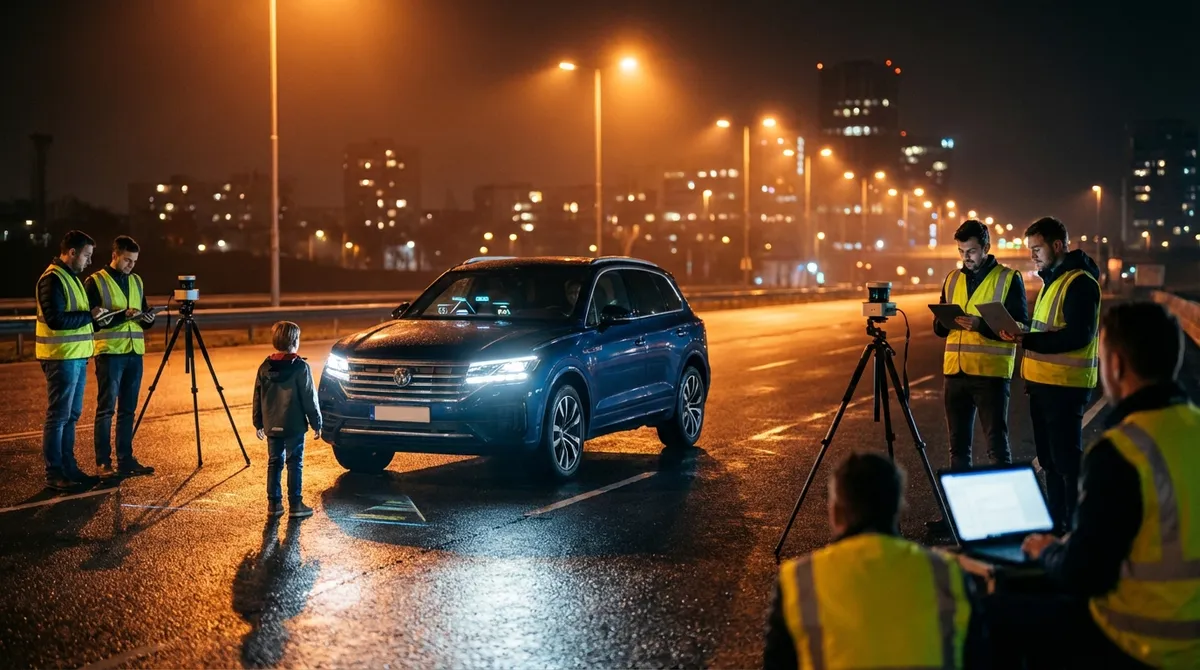
Advanced driver‑assistance systems (ADAS) are transitioning from optional packages to near‑mandatory content, especially in SUVs. However, the gap between “basic lane keeping” and a truly competent semi‑automated system is huge—and often buried in fine print.
Many automakers now bundle adaptive cruise control, lane‑keeping assist, automatic emergency braking (AEB), and blind‑spot monitoring under branded safety suites (e.g., Toyota Safety Sense, Honda Sensing, Ford Co‑Pilot360). The National Highway Traffic Safety Administration (NHTSA) and IIHS have pushed for standard AEB across lineups, and most volume SUV models now comply, often with pedestrian detection and growing cyclist detection coverage.
Where things diverge is in lane‑centering logic, cut‑in handling, and sensor fusion. Some systems rely heavily on camera‑only perception, while others layer cameras, radar, and—in higher‑end EV SUVs—lidar or high‑definition maps. This affects how well an SUV can maintain its lane on faded markings, handle sharp curves, and react in low‑visibility events. For example, vehicles that rely solely on front cameras can struggle in heavy rain, fog, or glare, forcing frequent disengagements.
Regulatory pressure is also rising for pedestrian and vulnerable road user protection. Expect more SUVs—traditionally criticized for higher front ends and more severe pedestrian impact profiles—to adopt softer front structures, active hoods, and more advanced object‑classification algorithms in their AEB. Over‑the‑air updates are increasingly used to refine detection distance and intervention thresholds, sometimes improving stopping performance well after the vehicle leaves the factory.
For enthusiasts, the key takeaway is that two SUVs can both advertise “lane centering and AEB” yet behave very differently. Independent evaluations and owner reports are becoming just as important as technical spec sheets.
3. Sensor Suites and Redundancy Are Defining the Next Generation of “Safe SUVs”
What used to be a simple checklist—front airbags, ABS, stability control—has exploded into complex sensor suites that determine how an SUV perceives the world. The latest industry trend isn’t just adding more sensors, but layering redundancy to make the system more fault‑tolerant.
Modern SUVs commonly use:
- Front cameras for lane detection, traffic sign recognition, and object classification
- Short- and long‑range radar for distance measurement, adaptive cruise, and cross‑traffic alerts
- Ultrasonic sensors for low‑speed parking and obstacle detection
- Surround‑view camera arrays for 360‑degree imaging and trailer assistance
- Interior cameras for driver monitoring and occupant detection
Premium and cutting‑edge EV SUVs are moving toward multi‑sensor redundancy. For example, a braking decision for a pedestrian might require confirmation from both camera and radar, reducing false positives and unnecessary emergency stops. At the same time, some high‑profile brands are exploring camera‑only architectures, betting on AI perception and cutting hardware costs while accepting tighter performance constraints in adverse weather.
Another shift is internal safety monitoring. Driver monitoring systems (DMS) now do far more than check whether your hands are on the wheel. Infrared cameras can track eye direction, eyelid closure rate, and even head pose to determine whether you’re actually paying attention. In some SUVs, failure to respond to escalating alerts can trigger automatic slow‑downs, hazard light activation, and ultimately a controlled stop.
Serious shoppers should note not just what sensors are onboard, but how they’re integrated and updated. Robust sensor fusion and redundancy generally translate to more reliable real‑world performance—especially for drivers who depend heavily on assist systems during long commutes or towing and road‑trip duty.
4. Software, Cybersecurity, and Over‑the‑Air Safety Updates
As SUVs become rolling computers, safety isn’t just about crashworthiness—it’s about code. The shift to centralized vehicle architectures and OTA updates is one of the most significant industry pivots unfolding in real time, and it directly affects how quickly safety issues can be corrected.
Many current SUVs, particularly EVs and high‑content hybrids, utilize domain controllers or centralized compute units that coordinate ADAS, powertrain, body controls, and infotainment. This architecture allows manufacturers to push OTA updates that can:
- Refine AEB sensitivity or detection angles
- Improve lane‑centering smoothness or reduce “ping‑ponging”
- Adjust traction and stability control thresholds
- Expand or recalibrate driver monitoring behaviors
This flexibility has a clear upside: critical safety enhancements no longer require a service visit. However, it also creates cybersecurity exposure. A compromise of the vehicle’s communication pipeline or control units could, in theory, affect steering, braking, or acceleration functions. In response, automakers are adopting multi‑layer encryption, intrusion detection systems, strict partitioning between infotainment and safety‑critical domains, and secure boot processes.
Regulators and standards bodies are beginning to codify expectations around automotive cybersecurity and software lifecycle management. For buyers, a crucial due‑diligence step is understanding how long the manufacturer commits to OTA support, how frequently they deliver safety‑relevant updates, and whether the brand has a proactive track record of patching vulnerabilities.
Enthusiasts should also track how software roadmaps align with hardware capabilities. An SUV might ship with a robust sensor set but only modestly capable software on day one—with the promise of “feature growth” over time. That’s an opportunity, but also a risk if updates are delayed or quietly scaled back.
5. Weight, Power, and Battery Packs: The New Physics of SUV Safety
The SUV segment’s rapid electrification has fundamentally changed the mass and dynamics of these vehicles. Safety discussions can’t ignore the simple physics: many new EV SUVs weigh 20–40% more than their ICE counterparts due to large battery packs, and pack instant torque that can overwhelm low‑grip surfaces.
From the occupant’s perspective, more mass can improve crash outcomes against smaller vehicles or fixed objects, assuming the structure and restraint systems are up to the task. However, that same mass increases kinetic energy in a collision and raises the risk posed to other road users. Some safety researchers and regulators are now explicitly flagging the danger of very heavy, tall SUVs in mixed traffic, especially in urban environments with pedestrians and cyclists.
To counteract the weight penalty, engineers are adopting:
- Ultra‑high‑strength steels and aluminum structures to maintain rigidity while trimming mass
- Low‑mount battery packs that improve center of gravity and reduce rollover propensity
- Sophisticated brake‑by‑wire and regenerative braking strategies to manage stopping distances
- Advanced tire compounds and larger contact patches to cope with higher loads and torque
On the software side, stability control and traction management are becoming more predictive, especially in dual‑motor EV SUVs. Torque vectoring between axles—and sometimes between left and right wheels—helps control understeer and improve stability in evasive maneuvers. Some performance‑oriented SUVs also integrate adaptive dampers and active anti‑roll bars managed by central ECUs, striking a balance between comfort and emergency handling.
For performance‑minded buyers, this means the days of judging SUV safety purely by curb weight and airbag count are over. Evaluating how the vehicle manages its mass—through structure, control systems, and tires—is now just as critical as looking at horsepower figures.
Conclusion
SUV safety is no longer a static spec; it’s a moving target shaped by evolving crash tests, rapidly advancing driver‑assistance tech, complex sensor suites, and software that can transform vehicle behavior after purchase. Electrification adds another layer, changing the physics of collisions and forcing new engineering solutions.
For enthusiasts and serious shoppers, staying informed means looking beyond badges and buzzwords. Understand how an SUV performs in the latest test protocols, how its ADAS stack is engineered, what kind of sensor redundancy and OTA support it offers, and how it manages the realities of modern weight and power. The models that get these fundamentals right will not only feel more confidence‑inspiring behind the wheel—they’ll also age better as standards and expectations continue to climb.
Sources
- IIHS – Crash Test and Vehicle Ratings – Detailed information on updated side‑impact, small‑overlap, and rear‑seat evaluations for SUVs and other vehicles
- NHTSA – 5‑Star Safety Ratings – Official U.S. government safety ratings and test procedures, including AEB adoption and NCAP developments
- Euro NCAP – Future Safety Systems Roadmap – Insight into upcoming test protocols and ADAS expectations influencing global SUV designs
- U.S. DOT – Vulnerable Road Users Safety Information – Context on how SUV design and safety tech intersect with pedestrian and cyclist protection
- National Renewable Energy Laboratory (NREL) – Vehicle Electrification Research – Technical background on EV architecture, mass implications, and system integration relevant to modern electric SUVs
Key Takeaway
The most important thing to remember from this article is that this information can change how you think about Industry News.